


Wembley Nights: how British heavyweights brought back the stadium superfight
Posted by INDEPENDENT LABEL
The sound that defines it is a low rumble that climbs to a roar, 90,000 voices turning a right hand into folklore. Anthony Joshua dropping Wladimir Klitschko at Wembley in 2017 gave Britain a template for the stadium superfight in the streaming age, and a reminder that heavyweight nights can still feel like national occasions. That roar did not arrive out of nowhere. It was built on a long British appetite for big men under bigger lights, and on a modern machinery that turned boxing back into an event.

The old Wembley ache and the Lennox years
For those raised on Frank Bruno, the longing was plain. In September 1995 he finally claimed a world title by beating Oliver McCall at the old Wembley, with around 30,000 in attendance. It showed that the heavyweight belt could still summon a crowd even before the current stadium era.
The craving ran deeper than one champion. When Lennox Lewis fought Bruno at Cardiff Arms Park in October 1993, the first bell sounded at around 1am to satisfy American television, with a reported crowd of 25,784. Staying up for heavyweight title boxing was already part of British fandom. And the scarcity mattered. As late as 1994, an Independent report on Lewis’s bout with McCall noted it was only the eighth world heavyweight title fight ever staged in Britain or Ireland. Big men did not come here often, which made every visit feel consequential.
Wembley rebuilt, and the event returns
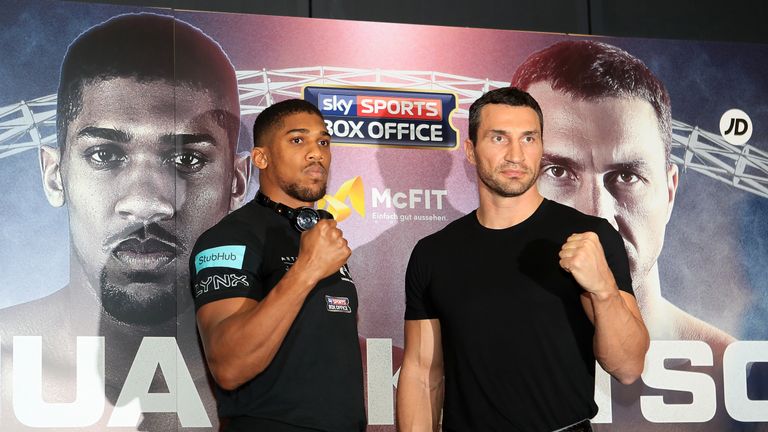
The physical stage changed first. The redeveloped Wembley reopened in 2007 and quickly became the modern template. The sport tested the acoustics. Carl Froch versus George Groves II in 2014 drew around 80,000 and is widely credited with kickstarting the return of British stadium boxing as a mass cultural moment. It was a super‑middleweight rivalry, not a heavyweight clash, but the mechanics were instructive. Sky Sports treated it like a festival date rather than a routine bill: a packed weigh‑in, The Gloves Are Off theatre, and a week of content that pulled casual audiences towards fight night. The message was unmistakable. Build the week like an occasion and people will turn up for it.

Joshua–Klitschko and the modern template
Then came Joshua–Klitschko, the night Wembley felt like it belonged to boxing. Around 90,000 watched a rising British star get dropped in round six and then stop the long‑reigning champion in the eleventh. The jeopardy, the momentum swing, the sheer scale made Joshua the biggest name in British boxing. More than that, it sketched a plan for how to stage heavyweights at home: anchor it in the national stadium, sell a narrative that cuts beyond the core, and let television production magnify the stakes.
Escalation: reported records and an all‑British changing of the guard
Stadium nights kept finding headroom. Tyson Fury versus Dillian Whyte was reported at around 94,000 in 2022, underlining demand for a heavyweight event on home soil. In September 2024, Daniel Dubois stopped Anthony Joshua at Wembley to claim the IBF title, reported at around 96,000 by specialist outlets and described as the biggest post‑war British boxing crowd. It was an all‑British title change that instantly entered gym talk and office chat. And it renewed calls for the one the public still wants most. George Groves, who felt the shudder of Wembley from inside the ropes in 2014, has urged that Tyson Fury versus Anthony Joshua be staged at the national stadium.
Why the show beyond the ropes matters
Modern British stadium fights do not live by jabs and hooks alone. The spectacle has become part of the substance. Event‑led production took centre stage a decade ago for Froch–Groves II, and the blueprint holds: content that sharpens the rivalry, a weigh‑in that feels like a gig, news packages tuned to primetime attention spans, and entrances that make the first bell feel like a release. None of this is garnish. It is how casual fans recognise that a fight is bigger than the belt. When 80,000 or 90,000 people share that recognition in real time, the show bleeds into the atmosphere and back onto the broadcast.
Wembley logic: seats, hospitality and the feel of scale
Promoters are not sentimental about venues. Wembley makes sense because it holds the most people, because the hospitality market is deep, and because the visual language of the place turns a domestic contest into something that feels global. That matters for casual buyers, for sponsors and for fighters who want nights that echo years later. It also comes with risk. Outdoor shows in Britain flirt with the weather and the calendar, as seen around Froch–Groves II when ticketing, operations and even an England fixture were live considerations. The Principality in Cardiff remains a natural stage too, a roofed alternative with proven logistics that can swallow a big gate and give television a controllable environment. The decision is almost always a balance of inventory, spectacle and operational risk.
Sightlines, sound and the alchemy of a big bowl
Ask anyone who has watched a fight from the gods. Stadium sightlines are a trade. You buy the collective electricity and accept that, from distance, the ring shrinks to a square of light. With heavyweights the equation shifts. The peril is legible from anywhere. You can follow the story by the sound alone: the intake of breath before a right hand, the staggered spread of a celebration around the bowl. For promoters and broadcasters, that rolling sound is currency. It reads on camera, it raises the hair on the neck of the fighter walking out, and it turns highlights into something people revisit.
Scheduling and the pull of American time
There is always a clock running in the background. Britain has form for moving the first bell to suit American primetime. Lennox Lewis versus Frank Bruno began in the early hours in 1993, a hard reset of the body clock for thousands at Cardiff Arms Park so HBO could run the show when it wanted. That logic has not gone away. Box.Live has reported interest from Turki Alalshikh in a Wembley fight with a late‑night start to suit a US audience, subject to licensing and operational approvals. A late London finish means transport, residents and policing all need to sign off. The upside is obvious for a fight with global pull, but the old trade‑offs remain.
Pay‑per‑view habits and the machinery behind the moment
These nights sit on a broadcast economy that now runs across platforms and territories. British Boxing News reports Matchroom Boxing has a five‑year extension with DAZN, promising more than 30 fight nights annually across UK and US markets. The right heavyweight date at Wembley gives a streamer or a pay‑per‑view broadcaster something rarer than a sell: an event around which everything else can be programmed. That is why ring‑walk times, preview shows, shoulder content and even the weigh‑in carry strategic weight. They are rungs on a ladder to a moment that can pull in viewers who could not tell you the rankings but know a genuine occasion when they see one.
What all‑British clashes do to the country
Joshua–Klitschko drew Britain to a global fight. Fury–Whyte was about home scale. But it is the all‑British heavyweight clash that tightens the knot between sport and public. You do not need to explain a rivalry when both surnames already sit in the national conversation. You do not need to teach the audience why it matters; the jeopardy is obvious. In 2024, the sight of Dubois taking a title off Joshua at Wembley had that quality, a feeling that the belt had changed hands in the centre of the country rather than at an overseas carnival.
The next decade of British stadium fights
Where does it go next? The shortlist of venues is short. Wembley, when the weather and the calendar allow, is still the place that turns a British fight into a public gathering. Cardiff offers a roof and reliable operations. The split between domestic demand and global windows will keep shaping ring‑walk times. Authorities will continue to scrutinise late finishes, transport plans and resident impact. But the path is clearer than it has been in years. British heavyweights have the belts and the names; broadcast partners have the appetite; the public has the habit again.
There is one obvious box left to tick in the capital, an all‑British fight that would test the reach of the sport and the patience of the travel stewards. Whether or not that happens in London, the template exists. Build the week like a festival, put the first bell where it carries furthest, and let the big men get on with the business that only they can do. When it works, the night feels like it belongs to everyone, the kind you still talk about when summer turns into football weather again.
Shop British heavyweight boxing
Explore Independent Label designs inspired by British heavyweight boxing.

From N.W.A to Kendrick: the story of Compton rap
How the ladder match changed WWE, from Razor vs Michaels to Money in the Bank

Sun God Nika and Gear 5: how One Piece reimagined a shonen hero
From De La Hoya to Canelo: how Mexican boxing built the modern superfight
From GTA III to San Andreas: how the PS2 era reinvented the open world
The Undertaker’s many lives: how a 30-year persona kept wrestling haunted

Saiyan Pride and Rivalry: Goku, Vegeta, Frieza and the making of Dragon Ball’s myth

Demon Slayer’s Upper Moons explained: ranks, roles and rivalries

Shenmue and the birth of the living open world: how a Dreamcast gamble changed games
The Last Dance Effect: how the 90s Bulls made NBA style iconic again

