


The Last Dance Effect: how the 90s Bulls made NBA style iconic again
Posted by INDEPENDENT LABEL
When ESPN moved up The Last Dance to 19 April 2020, with the NBA itself on pause, the effect was immediate. People tuned in for the rings and the rivalries. They stayed for the look. The ten-part documentary, built on season-long access to the 1997–98 Chicago Bulls and previously unseen footage, did more than revisit a dynasty. It reintroduced the visual and sonic language that made the 90s Bulls feel vital: the cut of the uniforms, the theatre of player introductions, Dennis Rodman’s hair and nails, Michael Jordan’s sneakers and a soundtrack that snapped the decade back into focus.
The documentary that re-scored a dynasty
The Last Dance arrived with a clear sense of time and texture. USA Today reported that the production drew on nearly 500 hours of material, which helps explain why the series plays like a period piece, as much about ambience as about basketball. Its narrative centres on the final championship season while stepping back to show how the machine was built. Six titles in eight years and back-to-back three-peats in 1991–93 and 1996–98 form the spine. The sound, the fashion and the framing fill out the picture.
The music mattered. The series’ hip-hop-led approach, shaped by music supervisor Rudy Chung, brought the era’s rhythms back into the room. It sits neatly alongside the 90s broadcast memories etched into fans’ heads, from the NBA on NBC’s Roundball Rock, John Tesh’s theme that ran from 1990 to 2002, to arena anthems that bled into wider culture. Chicago’s in-house sound had its own mythology, documented on the Bulls’ championship soundtrack compilations, which ranged from staples like Sweet Home Chicago to Space Jam-adjacent selections. When those cues land in The Last Dance, they do more than decorate scenes. They anchor you to a time and explain why it felt cool the first time.

Jordan mythology, styled for the 90s and replayed for now
Michael Jordan’s dominance is sports history. The Last Dance turned that history back into a style conversation without reducing him to product. The series arrived bracketed by guides and features on sneakers and the Bulls’ wider cultural imprint, which only underlined what Vogue and others have long argued: that the Jordan, Scottie Pippen and later Dennis Rodman Bulls redefined cool beyond the court. The camera lingers on textures as often as it does on jump shots. It is the grain of a practice jersey, the way a tracksuit moves down a tunnel, the particular calm of Jordan on a team plane.
That attention resurfaced the shape of 90s basketball style as many people actually experienced it. The uniforms were clean but assertive. The Bulls’ black pinstripe alternate carried a sense of primetime intent, while the red and black palette gave even warm-ups a certain authority. Jordan’s shoes were never background. They sit inside almost every memory fans carry of him. The documentary does not need to list model names; the outline of a silhouette carries the meaning.
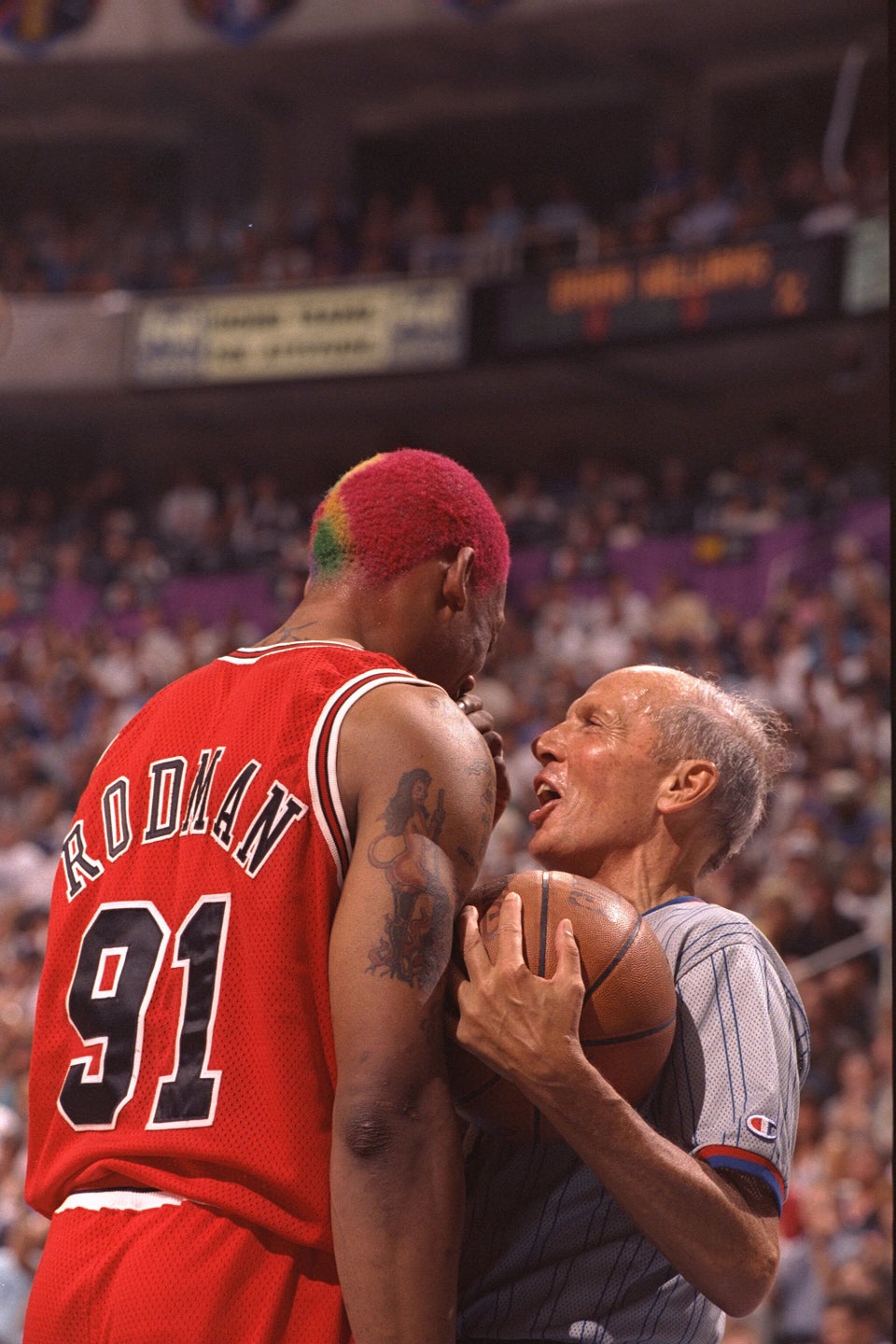
Rodman, televised rebellion
Dennis Rodman was the team’s loudest culture signal and The Last Dance knew it. ESPN’s analysis frames his mid-90s persona as a pop-culture phenomenon: flamboyant style, painted nails and a presence that travelled far beyond defensive rotations and offensive rebounds. The 1995 trade that brought Rodman to Chicago was seen as risky at the time, yet it paid off in both basketball and myth. Ahead of the 1996 playoffs, copies of his memoir, Bad As I Wanna Be, were stored in Chicago-area warehouses with armed guards. It sounds theatrical now, but it captures his scale. He was a player you heard about even if you never watched a game.
In the series, Rodman’s style is not a sideshow. It is woven into the Bulls’ fabric. The hair colour changes and lacquered nails sit with his footwork, creating a single image of refusal: refusal to fit, to be quiet, to accept that winning requires you to look one way. That image has aged into a universal reference for fashion people and basketball obsessives alike. The Last Dance restored that posture to centre frame for a generation who recognised the name before they knew the hustle stats.

Pippen and the silhouette of calm
If Rodman was the siren, Pippen was the glide. The Last Dance repeatedly positions Scottie Pippen not as a footnote to Jordan but as part of the team’s aesthetic grammar. Vogue’s reading of the era puts Pippen alongside Jordan and Rodman in the story of how the Bulls redefined cool. The series’ quieter passages with Pippen underscore a different kind of influence. Less visible than a hair dye, more durable than a single shoe release. Pippen’s economy of movement, the set of his shoulders in a warm-up and the restraint in interviews, all build a silhouette that still reads as modern sports composure.
Uniforms, warm-ups and the theatre of arrival
Part of the Bulls’ cultural force in the 90s came from how they staged themselves. ESPN’s retrospective on the dynasty notes how widely Bulls-style player introductions were adopted across the league, turning pre-game into a show. The mid-dynasty move from Chicago Stadium to the United Center amplified that theatre, with lighting, sound and presentation set to a new standard for a modern NBA. The Last Dance returns to these rituals with a steady eye. When the house goes dark and the names drop one by one, it reads as more than a sports moment. It is a cue for the jacket to come off and for a team uniform to become a national costume for two hours.
The Bulls’ kit underlined that progression. The black pinstripes, the assertive home reds and the crisp whites, paired with satin warm-ups that had a certain snap and sway, added up to a recognisable language. You did not need to own a jersey to feel involved. A cap, a tee, a jacket in those colours did the job. The Last Dance helped a new audience see that again and reminded an older one why their teenage wardrobe looked the way it did.

Chicago sounds like basketball
Teams become cities and cities become sounds. In the 90s, the Bulls helped fix the NBA’s audio identity as surely as they set the sporting agenda. NBC’s Roundball Rock underscored broadcast nights from 1990 to 2002, lodging itself in muscle memory. Local to Chicago, United Center nights came with their own canon, documented in the Bulls’ Greatest Hits soundtrack series and reaching into selections that were everywhere else too, from civic standards to tracks tied to Space Jam. The Last Dance edit leans into these resonances. It trusts that a certain drum pattern can place you in a concourse before tip-off. That is not nostalgia as garnish. It is context.
Chicago, again, on our screens
The Bulls’ aura was not built on aesthetics alone. It was winning, over and over, in a way that rewrote expectations. ESPN’s look back positions the dynasty as a bridge toward a modern NBA, not only on court but in how arenas presented the game and how teams introduced themselves to the world. The Last Dance lets you watch that bridge being crossed. It also invites you to pay attention to the materials underfoot. Stitched letters. Patent shine. A drum pattern you can count in your sleep.
That is the lasting effect. The documentary reframed the Bulls not as a museum piece but as a living set of references. You can follow the threads forward into how players announce themselves now, how teams stage nights and how streetwear still mines the 90s for form. Or you can do something simpler. Put on a red and black cap, hear Roundball Rock in your head and remember what it felt like to meet a team at the tunnel and know you were about to see something fresh. The wins are on the record. The style is how we keep them in mind.
Shop 1990s Chicago Bulls
Explore Independent Label designs inspired by 1990s Chicago Bulls.

From N.W.A to Kendrick: the story of Compton rap
How the ladder match changed WWE, from Razor vs Michaels to Money in the Bank
Sun God Nika and Gear 5: how One Piece reimagined a shonen hero
From De La Hoya to Canelo: how Mexican boxing built the modern superfight
From GTA III to San Andreas: how the PS2 era reinvented the open world
The Undertaker’s many lives: how a 30-year persona kept wrestling haunted
Saiyan Pride and Rivalry: Goku, Vegeta, Frieza and the making of Dragon Ball’s myth
Demon Slayer’s Upper Moons explained: ranks, roles and rivalries
Shenmue and the birth of the living open world: how a Dreamcast gamble changed games
Underground 2, DUB and the 2000s street-racing look: how games made the scene

