


From N.W.A to Kendrick: the story of Compton rap
Posted by INDEPENDENT LABEL
Compton is a postcode that travelled. Long before major labels and film studios amplified its name, local DJs and crews treated the city as both backdrop and subject. When N.W.A released Straight Outta Compton in 1988, they did more than start a chart run. They mapped a place onto the national imagination, turning late 1980s inner-city reality into pop culture’s most legible story about race, policing and youth. From there, Compton’s name became a shorthand that refuses to fade, resurfacing with The Game in the 2000s and renewed with Kendrick Lamar’s civic epics.
Before the breakthrough: a local scene takes shape
Compton’s reputation did not arrive fully formed with a debut single. It built in small rooms, via a web of DJs, sound systems and clubs that made the city a stop on an emerging circuit. Alonzo “Lonzo” Williams, a young DJ and club owner in Compton, crossed paths with Dr. Dre, Eazy-E and other future N.W.A figures. That proximity matters. It signals a lived infrastructure that predated national headlines and created the conditions for a local history to be heard beyond Los Angeles County.
The earliest West Coast hip hop was street-level in operation and tone, and for years the mainstream kept it at arm’s length. When exhibitions later traced the form from the Bronx to Compton, they drew a line between grassroots civic expression and the industry that eventually embraced it. By the time those museum walls included Compton’s Pulitzer-winning Kendrick Lamar, the city’s rap had moved from neighbourhood stages to the cultural canon without losing the specificity of place that defined it.
Street reportage with global consequences
Straight Outta Compton redefined rap and placed the late 1980s and early 1990s inner city into sharp, sometimes brutal, focus. The record’s language, its surveillance of the block and its hostility toward policing were grounded in experience. N.W.A explicitly confronted racial politics and police violence. Accounts from the time, and later analysis, note that the group’s stories echoed routine police brutality in 1980s Compton and beyond. It was politically personal in a way that made listeners feel they’d been dropped on a corner they might never visit.
That storytelling did not stay local for long. Media controversy followed, including an FBI warning. Industry eyes, sensing both danger and demand, turned west. Investment swelled and a boom in so-called hood movies and West Coast gangsta rap reshaped popular culture’s parameters. By the end of the decade, Compton had acquired what commentators described as a mythical aspect among many suburban fans. It became a symbol as much as a municipality, its image travelling through records, television and national media.

Policing, politics and a racial-spatial paradigm
Scholars have argued that hip hop’s strongest organising principle is place. In that frame, N.W.A’s work helped shape a racial-spatial paradigm that other West Coast artists drew from and reacted to. Lyrics named corners, narrated chases, coded gang territories and documented everyday negotiations with authority. The result was a city mapped in sound. You could recognise Compton by the concerns that repeated in verse: policing, precarity, community pride and a constant proximity to loss.
This intensity had knock-on effects for people who actually lived there. Even as demographics and local politics shifted over time, the reputational glow and glare remained. In 1990, East Compton even changed its name to East Rancho Dominguez, an attempt to sidestep the notoriety that popular culture had generated. That a civic rebrand felt necessary says as much about the force of the myth as it does about the media machine that amplified it.
Sound, image and the 1990s mainstream
As the 1990s took hold, West Coast rap moved into mainstream rotation and onto cinema screens. What began as reportage reached a far wider audience, supported by the industry appetite that controversy had stoked. The look and language of the region circulated with it, setting visual cues that were easy to recognise wherever you were watching or listening. Compton sat at the centre of that mental map, the name itself carrying narrative weight before a single bar had been heard.
None of this erased the city’s contradictions. The recordings remained preoccupied with where they came from, even as money, fame and touring blurred the lines between rootedness and stardom. Place stayed the organising story, and Compton was its most exportable keyword.

The 2000s: CPT as a stamp of credibility
Compton’s currency did not dim as a new generation arrived. Media coverage continued to treat the city’s name as powerful shorthand for street credibility. Artists like The Game were cited alongside Kendrick Lamar as proof that the CPT moniker still carried weight with audiences who prized authenticity. The message was simple: announce Compton and your narrative comes pre-loaded with expectations that hip hop culture recognises.
This period also showed how a place-based tradition adapts to a changing industry. New distribution channels altered how reputations were built, but the role of local crews and homegrown infrastructures remained crucial. Compton’s rap identity continued to travel through networks that mixed neighbourhood loyalties with new ways of reaching listeners.
Kendrick Lamar and the return to civic storytelling
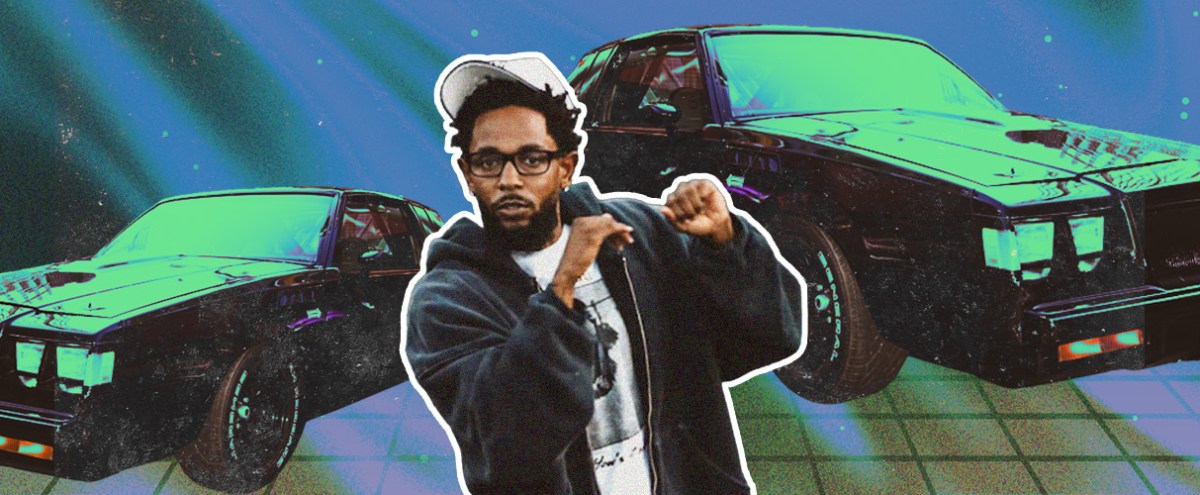
If N.W.A first scaled Compton’s story to a national stage, Kendrick Lamar recast it for a generation trained to parse ambiguity. His records are civic storytelling that treat the city as both character and conscience. On good kid, m.A.A.d city he frames Compton as pride and trauma, repeating lines such as “Ain’t no city quite like mine … in the city of Compton,” while also painting scenes where “Dope on the corner … daughter is dead, mother mourning her.” The tension is the point. It reads like a love letter written with clear eyes.
In mainstream coverage, Kendrick is frequently singled out for staying true to experiences he had growing up in Compton and for carrying forward socially conscious traditions within popular rap. That positioning is not accidental. When he interviewed the four living members of N.W.A for a Billboard cover story, he placed himself in a lineage: Compton as cradle of politically engaged, hardcore hip hop, a continuity from the late 1980s to now. It was a baton pass conducted in public, a conversation that said the city is still the thesis even as the sound evolves.
The milestones that orbit Kendrick strengthen that sense of civic importance. Major exhibitions that map hip hop from the Bronx to Compton situate him as part of a throughline that began in street-level contexts and now sits in the cultural canon. His recognition by the Pulitzer board signals another kind of arrival, one where American high culture accepts rap’s capacity for narrative and critique. All of it circles back to a place that, for better and worse, remains the muse.

Continuity and change in the West Coast sound
The West Coast has never moved in lockstep. What made Compton effective as a symbol also made it a pressure point: artists negotiated the city’s loaded image in different ways. Some hardened it into a brand. Others, like Kendrick, complicated it, turning the listener’s assumptions into subject matter. Media lists that sweep through the decades often mention a spectrum of names, from Dr. Dre and Eazy-E to Kendrick Lamar, YG and Roddy Ricch. Whether they sound alike is secondary to the fact that they share a civic tag that still shapes how audiences interpret them.
Place remains the throughline. Scholarly analysis of hip hop’s spatial logic helps explain why Compton endures as a reference point even for listeners far from Los Angeles County. It is a locale that became metaphor, a city whose name now gestures at realities and myths that hip hop helped build and still interrogates.
What carries forward
Straight Outta Compton’s shock to the system established more than a subgenre. It taught audiences to listen to location. Subsequent controversies and industry attention made Compton a magnet for focus and, at times, caricature. The 2000s proved the name still rang out in a shifting market. In this century, Kendrick Lamar reframed the city through albums that wrestle with the cost of loving and leaving home. Across it all runs a simple logic: the music holds because the place holds. As long as artists keep finding new angles on that truth, Compton will continue to signify.
Compton rap started with a neighbourhood telling the world what it saw. Decades later, the world is still listening, and still learning to see the city in three dimensions.
Shop Compton hip-hop
Explore Independent Label designs inspired by Compton hip-hop.


TAGS:
Wembley Nights: how British heavyweights brought back the stadium superfight
How the ladder match changed WWE, from Razor vs Michaels to Money in the Bank

Sun God Nika and Gear 5: how One Piece reimagined a shonen hero
From De La Hoya to Canelo: how Mexican boxing built the modern superfight
From GTA III to San Andreas: how the PS2 era reinvented the open world

The Undertaker’s many lives: how a 30-year persona kept wrestling haunted
Saiyan Pride and Rivalry: Goku, Vegeta, Frieza and the making of Dragon Ball’s myth

Demon Slayer’s Upper Moons explained: ranks, roles and rivalries

Shenmue and the birth of the living open world: how a Dreamcast gamble changed games
The Last Dance Effect: how the 90s Bulls made NBA style iconic again

