


Shenmue and the birth of the living open world: how a Dreamcast gamble changed games
Posted by INDEPENDENT LABEL
In winter 1999, on a console fighting for its life, Sega released a game that treated a small Japanese port town like a stage play that never stopped. Shenmue asked you to notice shop shutters, missed buses and rainclouds, then placed a vengeance story inside that clockwork. Long before open worlds were defined by checklists and fast travel, Yu Suzuki’s Dreamcast epic built a place that breathed.
The Dreamcast wager
Shenmue arrived on the Dreamcast in Japan on 29 December 1999, with North America following on 8 November 2000 and Europe on 1 December 2000. It was the brainchild of Yu Suzuki, the Sega AM2 designer behind Virtua Fighter and Out Run, who pitched something stranger than a standard sequel. Development began in 1996 as a Virtua Fighter RPG prototype on the Sega Saturn, before moving to the Dreamcast in 1997 and discarding the overt Virtua Fighter connection. Sega tried to explain the result with a new label, FREE, for Full Reactive Eyes Entertainment. The acronym was clunky; the intent was not. This was an action adventure that blended open-ended exploration with brawler combat and cinematic staging, inviting players to live in it as much as play it.
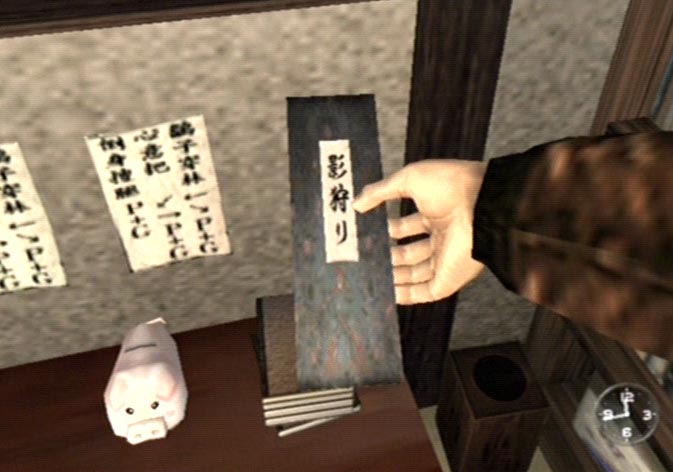
Set in 1980s Yokosuka, the story followed teenage martial artist Ryo Hazuki investigating the murder of his father. That premise could have underwritten a pure fighting game. Instead, Shenmue treated the investigation like a residency. You wandered streets framed by vending machines and family-run shops, asked neighbours for leads, and learned when particular doors would open. It could have been presented as a dry detective flowchart. On Dreamcast, it felt like inhabiting a neighbourhood with its own rhythms.
Building a town that keeps time
Shenmue’s headline trick was the one that time itself performed. The game tracked a day-night cycle, and the weather turned. Shops opened and closed to a schedule. Non-player characters did not simply stand in place and wait for you to trigger them; they followed routines. On paper this sounds like systems design. In practice, it gave Yokosuka an ordinary life, the kind of believable backdrop most 3D games of the era could not attempt.
Crucially, Shenmue did not just simulate; it calibrated mood. IndieGames describes its pacing as a balance of quiet, almost mundane moments and sudden dramatic confrontations. You could feed a stray kitten, linger at the harbour as the sun dipped, then get swept into a scuffle or a chase. That tonal swing helped the revenge plot feel rooted, not weightless. The town was not a backdrop for your character’s emotions, it was an environment with its own pulse that your character had to work within. The ambience of changing weather, scheduled openings and a fully voiced cast made the place feel present even when little was happening.
The effect was subtle but far-reaching. The New York Times would later describe Shenmue as one of the first open-world games, a notable early example of letting players explore a large simulated environment and pursue side activities at their own pace. Where later blockbusters would treat cities as sandboxes for spectacular stunts, Shenmue prized small frictions and passing time. The contrast the Times drew with Grand Theft Auto III’s mayhem is instructive. Shenmue’s freedoms were gentler, its consequences closer to the inconvenience of missing a shop opening or showing up late for a shift.
Everyday realism: part-time work and proper arcades
For all the talk of simulation, Shenmue’s magic was often found in its detours. The series is home to darts and full versions of classic Sega arcade games. That detail mattered. Rather than minigames dressed up as cabinets, you could walk into a parlour and play the real thing. Money-making, too, was more than a passing cutscene. Across the series, you could take on activities including driving forklift trucks, gambling, arm wrestling, fishing and street fighting. The forklift job in particular has become part of the game’s popular memory, standing in for Shenmue’s willingness to let routine become play.
Sega’s marketing leaned into the strangeness. In 1999 the company put out What’s Shenmue, a limited-edition promotional video and a jokey demo in which Ryo searched for Sega managing director Hidekazu Yukawa. It was an odd preface to a stately, reflective game, but it also signalled how singular Shenmue felt. Nothing else on Dreamcast behaved like it.
QTEs and the language of cinema
Shenmue did plenty with buttons and fists. When fights broke out, it loaded in brawler combat of the type Sega AM2 knew how to stage. Yet the game’s most controversial export would be the quick time event. Shenmue integrated QTEs into key scenes, presenting timed button prompts as a way to choreograph action with the precision of a film cut. The approach spread rapidly. For years after, designers used QTEs to handle expensive, cinematic sequences without handing over full control. It became a cliché in time, but in 1999 it felt like a bridge between the fixed timings of cutscenes and the looseness of player input.
Cinema was not just an action delivery system. Shenmue was fully voiced, a technical flex at the turn of the millennium that changed how its world sounded and how its characters landed. Conversations played out at an unhurried pace and, stitched to the daily march of time, gave weight to routine. Players still argue about the quality of the localisation, but there is little dispute that the decision to record it all helped define the game’s cadence and its odd charm.
The cost of ambition
Building all this was not cheap. Sega backed Shenmue at what was widely reported as an unprecedented cost for the time. In 2011, Yu Suzuki said the figure was closer to 47 million US dollars including marketing, and noted that development covered some of Shenmue II and groundwork for future entries. However you slice the accounting, it was a big spend on a new idea, on a console that needed a hit.
Commercially, Shenmue did not deliver what Sega needed. Game Developer has described it as one of the nails in the Dreamcast’s coffin, a costly bet that did not pay back fast enough to stabilise the platform. The pain felt larger because the artistic win was so clear. Sega had taken a risk on a design that defied trend-chasing. Players who clicked with it saw something new and rare, then watched the business case falter.
The sequel that doubled down
Shenmue II followed in 2001 on Dreamcast in Japan and Europe, then arrived on Xbox in 2002 in Europe and North America. Game Developer notes that it expanded the original’s scope with bigger environments, more activities, more fighting and more story events. Fans remember it as the moment the vision widened from one town into something broader. The techniques were the same. The confidence was higher. If the Dreamcast had struggled to accommodate the first game’s costs, the second showed that the design language still had headroom.
Dreamcast spirit, lasting ripples
Seen from 2026, Shenmue reads like a love letter to a kind of ambition the Dreamcast specialised in. Sega greenlit a project that felt off-trend, slapped an odd genre label on it, then let a team chase fidelity to a place. The result sits in the history of open worlds not just because of its size or its map, but because of its priorities. The victory was making a town believable enough that feeding a kitten felt like a meaningful thing to do between a fight and a clue.
If that mood resonates, we have a soft spot for it too. Our shop occasionally curates pieces inspired by late-90s Sega and the quiet, everyday side of Japanese game culture. Keep an eye out for designs that nod to that era’s arcades, workwear and the stubborn romance of the Dreamcast.
Shenmue did not become the template. It did something rarer. It expanded what a home console game could attempt, then left a set of techniques and an attitude that other genres could borrow at will. The day-night cycle. The weather that mattered. The NPCs who lived on a timetable. QTEs that stitched action to cinema. Proper arcades inside a videogame. These were not stunts, they were parts of a worldview. You can still feel those choices in the games that ask you to slow down and look around. That is the legacy of a town that kept time.
Shop Shenmue
Explore Independent Label designs inspired by Shenmue.


From N.W.A to Kendrick: the story of Compton rap
How the ladder match changed WWE, from Razor vs Michaels to Money in the Bank
Sun God Nika and Gear 5: how One Piece reimagined a shonen hero
From De La Hoya to Canelo: how Mexican boxing built the modern superfight
From GTA III to San Andreas: how the PS2 era reinvented the open world
The Undertaker’s many lives: how a 30-year persona kept wrestling haunted
Saiyan Pride and Rivalry: Goku, Vegeta, Frieza and the making of Dragon Ball’s myth
Demon Slayer’s Upper Moons explained: ranks, roles and rivalries
The Last Dance Effect: how the 90s Bulls made NBA style iconic again
Underground 2, DUB and the 2000s street-racing look: how games made the scene

