


From De La Hoya to Canelo: how Mexican boxing built the modern superfight
Posted by INDEPENDENT LABEL
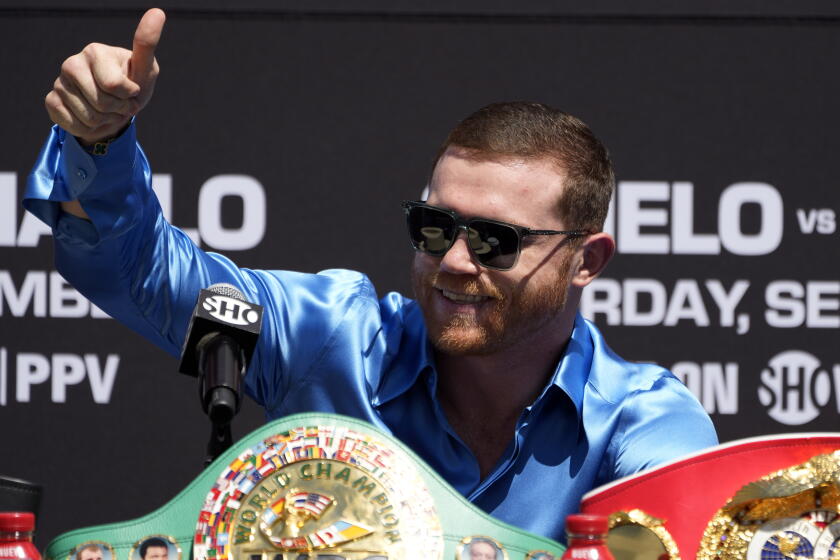
Mariachis playing El Rey at the weigh-in. Flags folded over the shoulders of fans who queued at dawn. Vegas hotel lobbies humming with green, white and red. When Saúl “Canelo” Álvarez takes over a fight week, it feels like a holiday because he and those who built him learned how to turn a bout into a festival. That lesson traces back to Oscar De La Hoya’s crossover era, then runs through Golden Boy’s grooming of a red‑haired teenager on an American undercard and out into a stadium in Texas where Álvarez staged a unification bout while the sport recalibrated around him.
The Golden Boy blueprint
De La Hoya set a template for the modern boxing superstar: fluent in two markets at once, comfortable on mainstream television and bankable on pay‑per‑view. Golden Boy Promotions applied that template to Álvarez from the moment they could. In May 2010, he stopped José Miguel Cotto on the Mayweather–Mosley undercard, a prime slot to introduce him to a U.S. audience without the pressure of headlining. The exposure nudged him towards top billing and the kind of profile that can anchor a calendar.
In Mexico, Televisa’s national reach made Álvarez a regular presence on mainstream shows, positioning him as a Mexican‑born analogue to De La Hoya’s crossover appeal. The alignment was obvious: a promoter experienced in selling a bilingual star, a network able to make a fighter part of daily life, and an athlete whose charisma and results matched the scale of the plan.
Success brought friction. In 2020, Álvarez split with Golden Boy and De La Hoya, and the feud has lingered. De La Hoya publicly claimed Golden Boy built Álvarez. By May 2024, as Álvarez defeated Jaime Munguia, coverage still cast him as the signature fighter of the era while noting the ongoing acrimony. It underlines where power sits in the sport. Promoters can light the path, but the men who sell the nights usually steer the car.

What Mexican style means now
Álvarez and trainer Eddy Reynoso reframed what Mexican schooling looks like at the elite level. Reynoso has emphasised that Mexico’s boxing tradition values defence alongside offence, and Álvarez has become the modern showcase for that blend: pressure that breathes, head movement that buys counters, scoring combinations that often finish with the hook.
No rivalry tested that identity more than Gennady Golovkin. Their two early fights brought everything that makes boxing maddening and magnetic: controversy, debate and delay. The 2018 rematch arrived after Álvarez tested positive for clenbuterol, which pushed the date back and intensified the noise. He won the second bout and, with it, reshaped the conversation about what Mexican style can look like under elite championship scrutiny. It was not a return to brawling. It was pressure applied with care, a body attack married to responsibility upstairs.

From big nights to big weekends
De La Hoya’s era showed a fighter could command a date; Álvarez has given those weekends a residency feel. He has often boxed on Mexico’s key holiday weekends, pairing sport with national celebration. On Mexican Independence Day weekend in 2022, mariachis played El Rey at his weigh‑in, a small detail that shows who he is speaking to and how he stages the moment. In May 2024, he returned on the holiday weekend against Munguia, a reminder that the calendar is as much a battleground as the ring.
Álvarez has also said he does not want to fight fellow Mexicans, citing the risk of fracturing his fan base. The Munguia bout shows how complicated that principle can become once the demands of the schedule, the weight classes and the market collide. The point remains: nationality is not a side note in boxing, it is a building block.

Venue politics: Vegas gravity and the Texas exception
Las Vegas is the sport’s capital for a reason. ESPN has described Álvarez as the modern face of boxing and detailed the economic halo his fight weeks cast across the city. When he lands there, hospitality, retail and nightlife all rise with him. Yet his star power travels. In May 2021, he pursued super middleweight unification against Billy Joe Saunders in Arlington, Texas, proof that the modern superfight can be exported to football stadiums when the right headliner is in place.
That geographical freedom is leverage. If a fighter can drive a Vegas economy and then fill a stadium elsewhere, the negotiation table looks different. The venue becomes part of the sales pitch to fans and part of the power play behind closed doors.
Superfight economics without the fluff
At the top end, boxing still lives and dies on whether people will pay to watch. Álvarez’s meeting with Julio César Chávez Jr. cleared over one million pay‑per‑view buys, the first such event outside the Mayweather, Pacquiao and De La Hoya orbit since 2002. That threshold matters. It shows how rare it is to break through the niche and how a single personality can unlock the wider audience required to justify a citywide takeover.
The sales machine does not stop at the purchase button. Televisa’s spotlight in Mexico helped cement Álvarez’s everyday profile, while in the U.S. his fight weeks feel like festivals built around a main event. Walkouts project home colours. The weigh‑in doubles as a miniature concert. Merch tables look more like team shops. The boxing match remains the centre, but the periphery has swelled into something that reads as a full weekend of sport and culture.
Matchmaking as brand building
The choices of opponent tell the story of an era. In 2016, Amir Khan jumped two divisions to face Álvarez at middleweight for the WBC and Ring titles, a piece of matchmaking that illustrated how far Álvarez’s gravity extended. In 2021, Saunders provided belts and a stylistic puzzle in a Texas stadium. Golovkin offered peril and legitimacy across multiple fights. In 2022, Álvarez lost to Dmitry Bivol after moving up to light heavyweight, a reminder that ambition carries risk and that the pound‑for‑pound debate never stands still.
Across those nights, Reynoso’s schooling stayed visible. It is pressure with a plan and body punching not as blunt force, but as a chess move. That identity, refined on the biggest stages, has filtered into how younger fighters and coaches talk about Mexican style today.
Why the face of boxing keeps its seat
The phrase is overused, but in Álvarez’s case it fits the evidence. ESPN’s framing of him as the face of boxing matches what Vegas hotels, U.S. arenas and Mexican broadcasters can confirm. He has a personal brand that travels, right down to the No Boxing No Life imprint visible around fight weeks. He carries the national colours without shrinking his appeal to one country. He has also absorbed the cycles that tend to unseat headliners, from legal fights with promoters to a loss in a higher division, and still shows up on the biggest weekends to an atmosphere that feels like a bank holiday.
Walkouts, colours and the sound of belonging
The superfight is a global TV product now, but the arena always tells you who holds the room. Canelo’s fight weeks are soundtracked by brass and strings, with song choices like El Rey functioning as both tradition and branding. The Mexican tricolour dominates the lower bowl. The effect is less about choreography than a shared understanding of why everyone has gathered. When the night begins to breathe, the ring can feel like a national theatre, and that sensation, beamed outward, sells the idea that you should not miss the next one.
The Crawford question and what comes next
Every era has its crossover conversation, and the current one revolves around Álvarez and Terence Crawford. Coverage has picked at what such a fight would say about the state of the sport and about the health of the superfight as a concept. Weight, timing and networks complicate matters. The fact it remains the conversation speaks to Álvarez’s pull. He is still the lodestar by which other big nights are charted.
Why superfights feel like holidays
Because Mexican boxing taught the business to build them that way. Build a face the mainstream can recognise. Anchor the dates. Treat the walkout like theatre. Reward the hardcore with craft that stands up to scrutiny. And make the casual fan feel like their ticket buys entry to something larger than a scorecard. From De La Hoya’s crossover playbook to Álvarez setting the tone on major fight weekends, that is the architecture of the modern big night. The sport will still throw up surprises. The arguments will not end. But if you are looking for the centre of gravity, you can hear it before you see it: brass, strings and a song called El Rey.
Shop Canelo Álvarez
Explore Independent Label designs inspired by Canelo Álvarez.


TAGS:
From N.W.A to Kendrick: the story of Compton rap
How the ladder match changed WWE, from Razor vs Michaels to Money in the Bank

Sun God Nika and Gear 5: how One Piece reimagined a shonen hero
From GTA III to San Andreas: how the PS2 era reinvented the open world
The Undertaker’s many lives: how a 30-year persona kept wrestling haunted
Saiyan Pride and Rivalry: Goku, Vegeta, Frieza and the making of Dragon Ball’s myth

Demon Slayer’s Upper Moons explained: ranks, roles and rivalries

Shenmue and the birth of the living open world: how a Dreamcast gamble changed games
The Last Dance Effect: how the 90s Bulls made NBA style iconic again
Underground 2, DUB and the 2000s street-racing look: how games made the scene

