


Saiyan Pride and Rivalry: Goku, Vegeta, Frieza and the making of Dragon Ball’s myth
Posted by INDEPENDENT LABEL
Raditz landing on Earth did more than reveal Goku’s alien past. It flipped Dragon Ball’s tone, steering the series from scrappy martial arts antics to a survival match against invaders bred for war. The Saiyan Saga put a number on that threat. Vegeta and Nappa arrived so far beyond Yamcha, Krillin and Tien that even Piccolo struggled to keep up. From that point, power was not a rumour. It was a gulf. Across that gulf, a rivalry sparked that would define the franchise’s shape.
Goku and Vegeta: rivalry that grew into respect
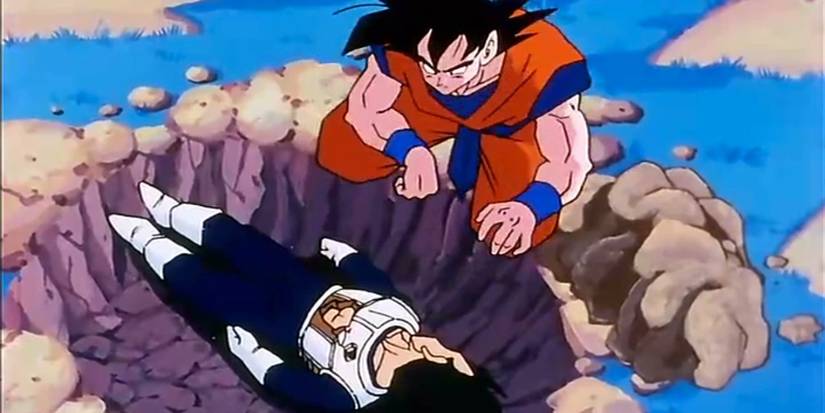
Goku’s first true face-off with Vegeta is framed with perfect clarity. One fights to defend Earth, the other arrives to conquer or erase it. Their duel in the Saiyan Saga lights the fuse. It is not a grudge born of pettiness, nor a final-boss showdown. It is the beginning of a competitive standard. From here on, everything either man does is measured against the other.
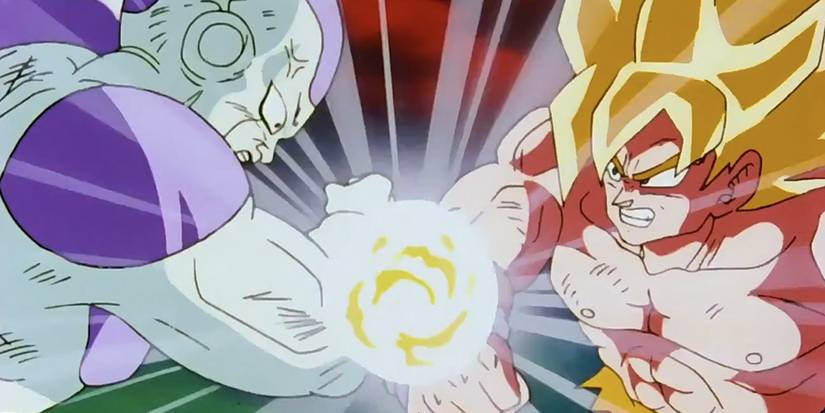
That standard migrates to Namek, where the field changes and the stakes harden. Frieza sits over the story and the personal becomes historical. The tyrant who destroyed Planet Vegeta is also the ceiling over the Saiyan race. Vegeta throws everything he has at that ceiling and falls short. In a rare, exposed moment he leaves the task to Goku. Goku answers it and turns a fable into an event. His first Super Saiyan transformation during the Frieza fight on Namek became a landmark: the moment Dragon Ball’s idea of power turned into shared visual language.
Rivalry does not vanish once the prophecy is fulfilled. It mutates. Vegeta measures himself against that golden line for years, and Goku keeps raising it. Respect builds on frustration, and teamwork arrives not as a sentimental speech but as hard calculation. Sometimes the win needs both of them.
Frieza: empire, extinction, and the one villain who never stays gone
Frieza is the threat that connects the personal pride of the Saiyans to cosmic consequence. The destruction of Planet Vegeta sits behind every exchange the prince has with the tyrant, and behind Goku’s fiercest fight. When Frieza returns in Dragon Ball Super with a new form, the story shows how transformation is both a motif and a plot device. Golden Frieza forces Universe 7’s defenders to step up again. Vegeta meets him as a Super Saiyan Blue and, for a stretch, outclasses him. Then Frieza plays the field rather than the duel and blows the planet apart. It takes a rewind by Whis, a Temporal Do-Over, to let Goku stop the catastrophe.
Frieza’s reappearance does more than reset the threat level. It recasts the triangle between him, Goku and Vegeta as Dragon Ball’s durable engine. They can share a battleground without becoming friends. They can even share a cause when a tournament demands it, as Frieza does later for Universe 7, but Vegeta’s disdain survives that truce. With Frieza, alliances are tactics, never reconciliations.
Saiyan pride, sharpened for the Super era
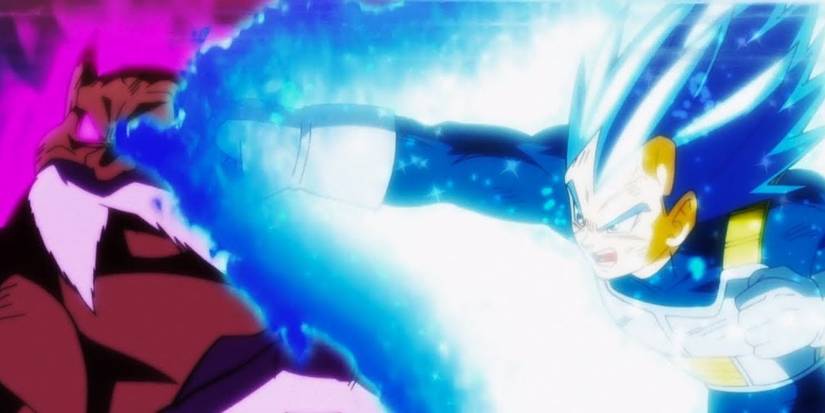
Dragon Ball Z established the Saiyans as a proud warrior race and reframed Goku through that lens. By Super, pride is cleaner, less myth and more statement. After Goku hears Bardock’s recording, both he and Vegeta spell it out as a drive to win rather than a calculation of odds. The series codifies that competitive edge in their new forms. Ultra Instinct sits on Goku like a calm, automatic read of the fight, while Vegeta’s Ultra Ego, linked to his training under a Destroyer, feels like a philosophy he can own. There is rivalry even in their differences. Each path is a way to be a better Saiyan than yesterday’s version, and a way to take the other’s measure without copying him.
Read that way, Saiyan pride stops being a slogan. It becomes a working principle that shapes how these characters fight, train and decide under pressure. Goku’s openness to new ceilings and Vegeta’s refusal to back off his line are not mirror images. They are complementary obsessions that keep the plot moving.
Power you can see
The leap from martial arts comedy to large-scale battle storytelling came with a visible scale. From the gulf shown in the Saiyan Saga through to Namek, Dragon Ball found a way to make power legible. Transformations are more than costume changes. They set tempo. Super Saiyan on Namek is the template because it binds character and escalation. Loss and fury lead to a form that looks and behaves differently, and the world of the story responds to it. Later, Golden Frieza’s return and the divine training that ushers in Super Saiyan Blue, Ultra Instinct and Ultra Ego take that template and make it modular. Each form says something about the fighter as well as the fight.
The human scale that sets the ceiling
The Saiyan Saga’s opening of the power gap matters because it preserves human scale. Yamcha, Krillin and Tien are part of the story’s emotional weather, and they are visibly outclassed by Vegeta and Nappa. Even Piccolo, who once towered over Goku as a threat, struggles to match the new arrivals. This is not a dismissal of the Earth fighters. It is the framework that makes the Saiyan standard meaningful. A ceiling only feels high when we know where the floor is.
That grounding remains useful later. Namek is a faraway planet with a tyrant sitting on its Dragon Balls, but the arc reads through recognisable relationships. Vegeta’s retreat from pure self-interest, Goku’s leap into a form nobody has seen before, and the fear that Frieza inspires land because the story seeded difference and distance early. Power is a theme, not a shortcut.
Tournaments and the art of the uneasy alliance
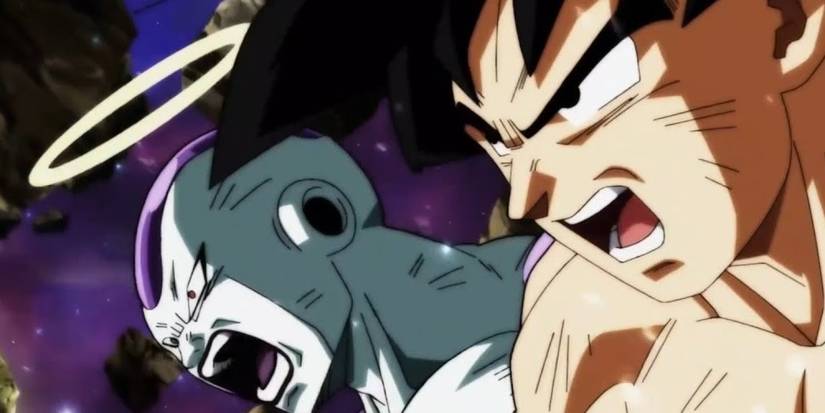
Dragon Ball’s tournament storytelling works when it uses structure to highlight choices. The Tournament of Power shows it by forcing combinations you would never get on a normal day. Frieza’s contributions to Universe 7’s survival prove that even the series’ purest villain can be part of a plan when the scoreboard demands it. After the tournament, Vegeta’s attitude towards him makes the point again. Survival does not mean forgiveness. Respect is not an automatic deposit. A truce can be useful and still feel like poison on the tongue.
That atmosphere suits a rivalry like Goku and Vegeta’s. When the bell rings, both chase the win with a kind of austerity that has been present since Z. Super’s tidier definition of pride only clarifies it. They are there to find the best outcome available, and if that requires fighting alongside an enemy, so be it. The stories do not collapse into harmony. They hold the tension and let it power the matches.
Why this rivalry keeps its grip
The triangle of Goku, Vegeta and Frieza endures because it binds motive to method. Pride explains why these characters go again, whether the odds tilt in their favour or not. Rivalry is not a side quest. It is the calibration point for every training scene, every transformation, every quiet exchange where one fighter admits, even if only to himself, that he needs the other to be at his best. Frieza is the stress test that keeps those truths from going slack.
There is also a clarity to the way Dragon Ball shows power that makes it easy to talk about. Forms, colours, names and discrete states give fans a map. It invites comparison and fuels debate. You can read the series strictly as action, or as a working model of competition where thresholds are earned and the next target is always visible. That model travels because ambition and rivalry are familiar shapes, whether you meet them in a training hall or in a final on a distant planet.
The myth that keeps training
From the moment Raditz drew a line across Earth’s horizon, Dragon Ball has used rivalry, pride and a tyrant’s shadow to train its own legend. Goku and Vegeta set the pace by trying to outdo each other without losing themselves. Frieza gives that chase a shape by being the thing they must both overcome, whether by beating him outright, outlasting him or enduring a tournament that briefly puts him on their side. The transformations that track their growth make those ideas visible and portable. The story lasts because it treats competition as a living thing: not a riddle to solve, but a standard to keep raising.
Shop Dragon Ball
Explore Independent Label designs inspired by Dragon Ball.


TAGS:
Wembley Nights: how British heavyweights brought back the stadium superfight
From N.W.A to Kendrick: the story of Compton rap
How the ladder match changed WWE, from Razor vs Michaels to Money in the Bank
Sun God Nika and Gear 5: how One Piece reimagined a shonen hero
From De La Hoya to Canelo: how Mexican boxing built the modern superfight
From GTA III to San Andreas: how the PS2 era reinvented the open world
The Undertaker’s many lives: how a 30-year persona kept wrestling haunted
Demon Slayer’s Upper Moons explained: ranks, roles and rivalries

Shenmue and the birth of the living open world: how a Dreamcast gamble changed games
The Last Dance Effect: how the 90s Bulls made NBA style iconic again

