


Allen Iverson and the NBA dress code: how The Answer changed league style
Posted by INDEPENDENT LABEL
At his 2001 MVP press conference, Allen Iverson turned up with a bandana knotted over his braids and diamond studs catching the flashbulbs. It was a look lifted from mixtapes and corner shops, not menswear catalogues. Four years later, the NBA answered with a dress code that insisted on business casual for arrivals, departures and injured players seated on the bench. In the space between those two images sits a culture clash that redefined what basketball could look like.
A look the league struggled to file away
Iverson arrived in the late 1990s with cornrows, visible tattoos and oversized streetwear rooted in hip hop. Throwback jerseys, baggy tracksuits, fur, du-rags and heavy chains walked into arenas at the same speed as his crossover. Lifestyle and sports media of the time often reached for the same word to describe it, labelling his aesthetic as “thuggish.” It was not a neutral description. It carried assumptions about class, race and respectability that trailed his outfits into every arena tunnel.
Iverson has never been shy about why he dressed the way he did. His style, he has said, was about upbringing and authenticity rather than provocation. “I never wore a suit to the gym or the park,” he told Complex, adding a wider point that has echoed for years: it is who you are, not what you wear. He has consistently pushed back on the racialised coding around clothing, rejecting the “thug” label and the insinuation that a du-rag or a big chain reflected anything but his own life and taste.
October 2005: the dress code lands
In October 2005, the NBA introduced a dress code. Players were required to wear business casual to and from games and to present a conservative image when inactive on the bench. The policy was widely read as a corrective to what came to be known as Iverson-era style. GQ, reflecting on that period, positions Iverson among the main reasons commissioner David Stern implemented the code, given how prevalent his aesthetic had become among players and in the wider culture around the league.
Iverson himself has recalled that once he dressed how he wanted, others felt free to do the same. He specifically pointed to Kobe Bryant turning up in diamond chains and baggy clothes, a sign that what began with one star had become a broader current. As the look spread from Iverson to his peers, the league’s answer was a stricter set of rules around presentation.
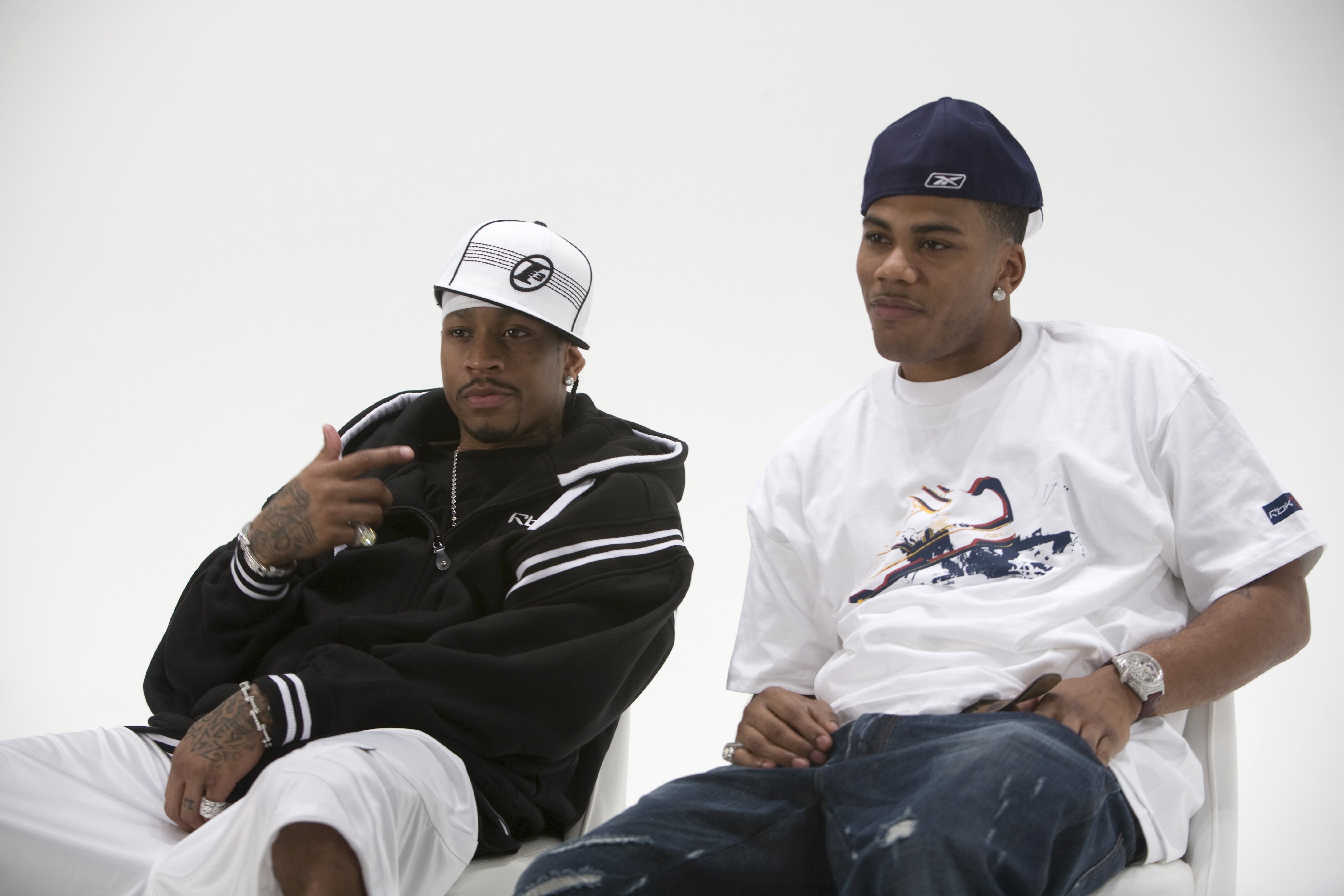
Media backlash, coded language and who defines “professional”
What the dress code meant, and for whom, became the argument. The NBA adopted the language of professionalism. Much of the media debate leaned on words like image, perception and respectability. Yet the targets were visible, and often Iverson-shaped. His braids, tattoos and jewellery were not agnostic style notes; they were symbols that told a story about Blackness, hip hop and youth culture to audiences predisposed to see them as threatening or unserious.
Basketball Network characterises Iverson’s impact as the point where hip hop aesthetics entered the NBA in full view. He wore what he liked. Fans connected with it, and many players followed. The friction came when that look clashed with an older idea of how a professional athlete should appear when the cameras were not on the court. Iverson’s reply to those who read menace into clothes was steady. “It’s who you are, not what you wear,” he told Complex, refusing the shorthand that conflated baggy denim with character.
The debate over presentation was really a debate over who gets to draw the line. If a suit is taken as the price of entry, what does that say about players whose reference points sit elsewhere. Iverson was not anti-tailoring. He was clear that policing taste through a narrow lens of acceptability often tracked race and class as much as it tracked hemlines.
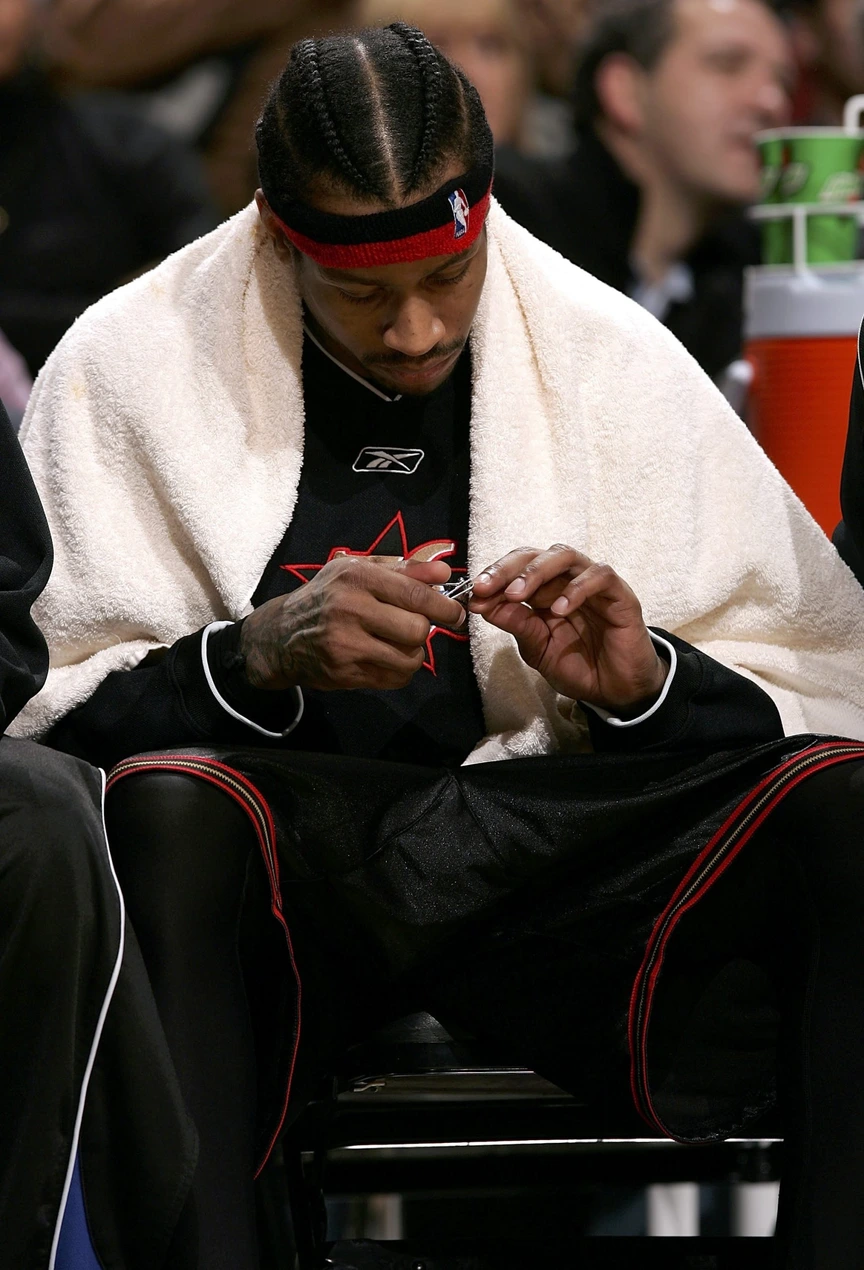
Normalising tattoos, braids and jewellery
In the 1990s, visible tattoos were far from common on NBA stars. Revolt credits Iverson with helping to normalise ink in the league. The same could be said of his braids and jewellery, which stopped feeling like outliers and started to look like part of basketball’s texture. The 2001 MVP press conference image, bandana and diamond earrings included, was more than a fit; it was a message about who gets to look like themselves on the sport’s biggest stages.
That normalisation was not overnight. By the time the dress code arrived in 2005, the distance between what many players wore and what the league wanted them to wear had already been made visible. Iverson did not shift style in the NBA by memo. He did it by showing up the same way, consistently, until repetition looked like reality.

A code that built a runway
Here is the paradox fashion writers keep returning to. The 2005 rules were meant to curtail a look. GQ argues they ended up formalising fashion as part of the NBA’s spectacle. Dress requirements pushed players to consider what they would wear into arenas. Cameras began to treat tunnels as pre-game theatre. Teams and media captured arrivals as content. Within that frame, players leaned into tailoring, luxury and experimentation.
That shift created a new kind of visibility. GQ points to LeBron James, Dwyane Wade and Russell Westbrook as early faces of the recalibrated stage. They appeared at fashion weeks, built relationships with designers and wore high-end labels to press events. The tunnel became a moving catwalk, part practical, part performance. If Iverson’s look had been read as too raw for the league, the next wave worked with the constraints and expanded the perimeter.
From blowback to tunnel fits
The culture did not flip a switch. There was resistance, and there were headlines, and there were rules. Over time, though, the tunnel developed into a fixture of NBA coverage. Cameras zoomed in. Editorial shoots appeared in arenas and practice facilities, capturing details that once would have been left in the car park. The in-between space grew into its own stage, where a player’s arrival could say as much as a post-game quote.
Iverson’s fingerprints are on that evolution, even if the setting looks different. He took the heat for dressing like himself before the industry had a template for it. Later stars benefited from an infrastructure that welcomed their experimentation and turned it into content. The end result is a league where expressive personal style is not only permitted, it is packaged and celebrated.

The post-Iverson landscape
LeBron James, Dwyane Wade and Russell Westbrook are often cited as the faces of the league’s modern fashion era. GQ’s framing places them squarely in the lineage that runs from the 2005 dress code to fashion weeks and showrooms. They wore high-end designers to press events, collaborated with labels and broadened the conversation about what a basketball star might wear before and after a game.
That visibility has a knock-on effect. Young players enter the league aware that what they wear will be photographed, tagged and discussed. Teams plan content around arrivals. Stylists and brands treat NBA schedules as calendars of influence. If the 2005 code tried to contain a look, its lasting impact was to build an arena where players now perform style with the same freedom they bring to the court.
Legacy, on his terms
Allen Iverson did not single-handedly write the NBA’s dress code, nor did he invent tunnel fashion. But the arc from his braids, tattoos and baggy gear to a formalised culture of player style runs straight through him. He forced a conversation about who gets to look like what in professional sport, and those reverberations are everywhere, from team buses to fashion weeks.
For readers who collect the era as well as watch it, Independent Label’s studio often nods to the same cultural markers Iverson put in play, from 90s and early-2000s basketball cues to tunnel-ready layering and jewellery-minded detailing. Not costume, just cues carried forward.
The Answer’s influence lives in today’s league every time a star walks into an arena knowing the camera is already rolling. It lives in the normalisation of Black style codes that once drew side-eye. It lives in the space players now have to be expansive and specific in how they present themselves. And it lives in the simplest of his lines, the one that continued to cut through critique and code. It is who you are. The clothes will catch up.
Shop Allen Iverson
Explore Independent Label designs inspired by Allen Iverson.

TAGS:
From N.W.A to Kendrick: the story of Compton rap
How the ladder match changed WWE, from Razor vs Michaels to Money in the Bank

Sun God Nika and Gear 5: how One Piece reimagined a shonen hero
From De La Hoya to Canelo: how Mexican boxing built the modern superfight
From GTA III to San Andreas: how the PS2 era reinvented the open world
The Undertaker’s many lives: how a 30-year persona kept wrestling haunted
Saiyan Pride and Rivalry: Goku, Vegeta, Frieza and the making of Dragon Ball’s myth
Demon Slayer’s Upper Moons explained: ranks, roles and rivalries
Shenmue and the birth of the living open world: how a Dreamcast gamble changed games
The Last Dance Effect: how the 90s Bulls made NBA style iconic again

